Launch offer — valid today only

📄 Digital book in PDF · read it on your phone or print it

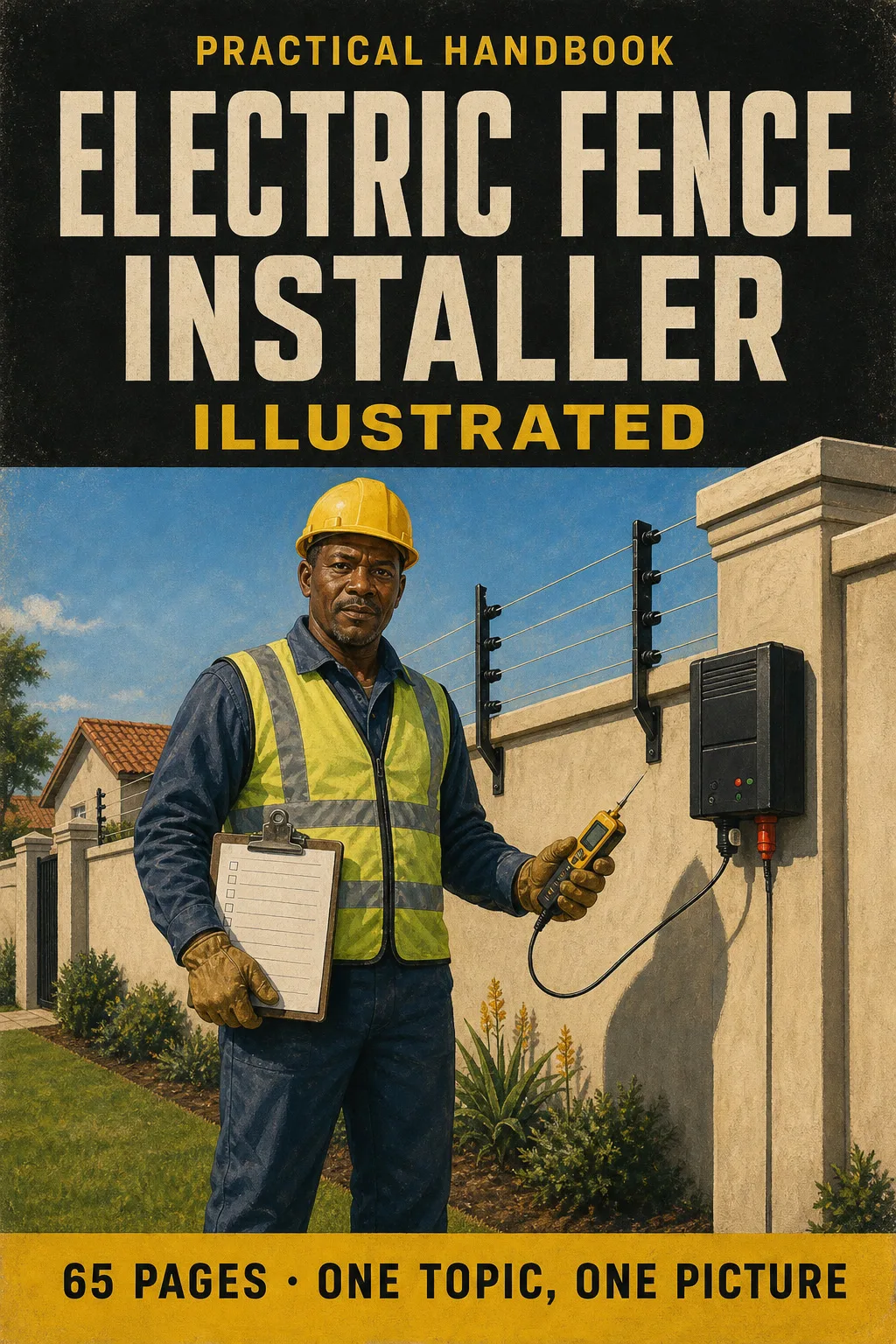
Electric Fence Installation in Drawings: Every Rule With Its Measurements, Every Job in the Same 6 Steps One Topic, One Drawn Page

The energiser, earth spikes and their spacing, wire heights, lead-out cables, gate crossings, warning signs, testing and the electric fence system certificate. Every topic has its own page: the drawing first, then what you need to remember. 65 illustrated pages.

START STUDYING THIS WAY

🔒 Secure checkout · PDF by email · 30-day guarantee

Every topic, its own pageEach rule drawn with its dimensions, the explanation beside it
65 illustrated pages9 parts, from the fence as a circuit to getting ready for registration
Up-to-date sourcesElectrical Machinery Regulations 2011, OHS Act 85 of 1993 and SANS 60335-2-76
PDF by emailFormat

Look Inside the Book

Every page has a big drawing and a box with the distances, heights and steps you need to know:

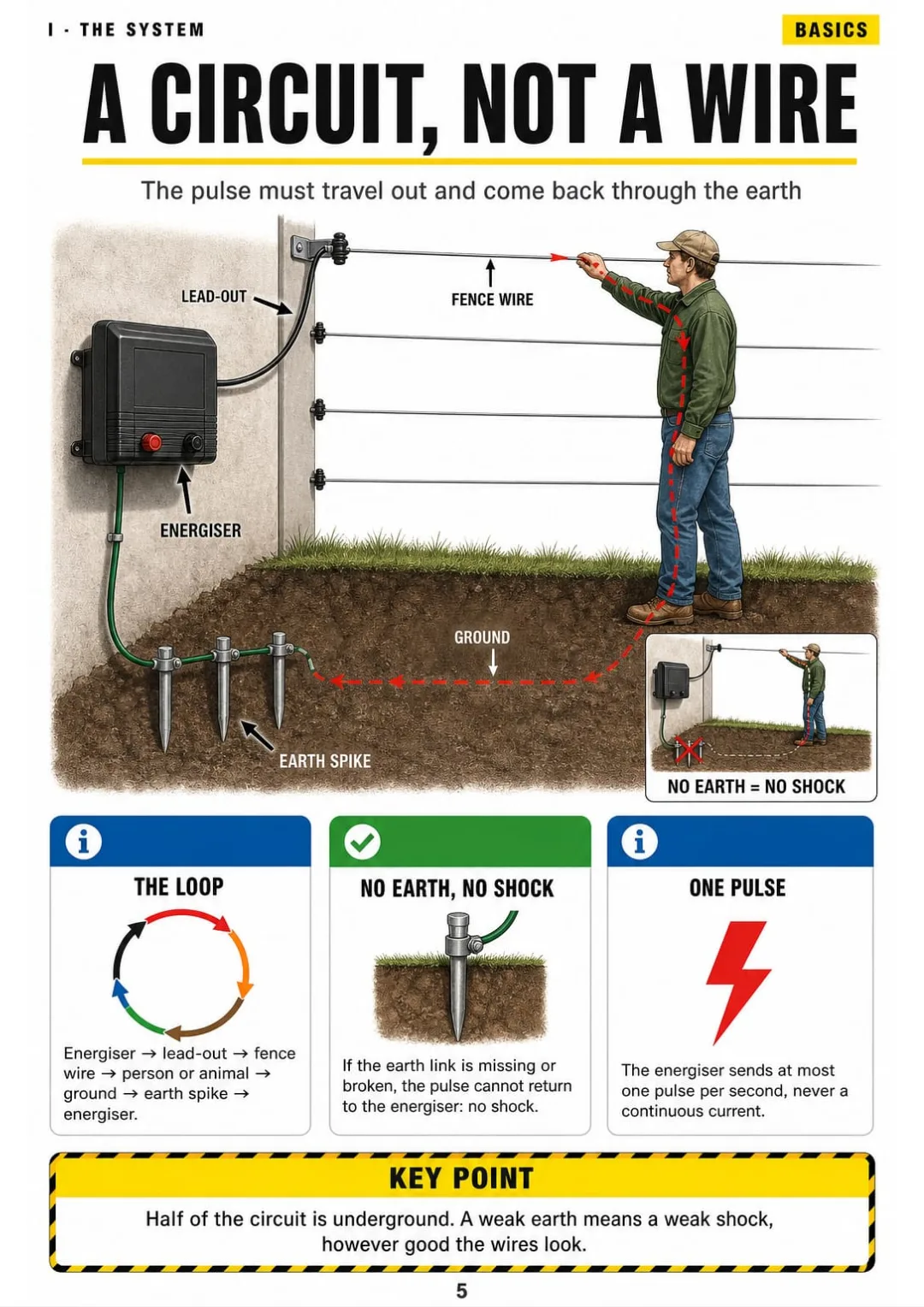
The full loop: energiser, fence, person, ground, earth spike – and back.
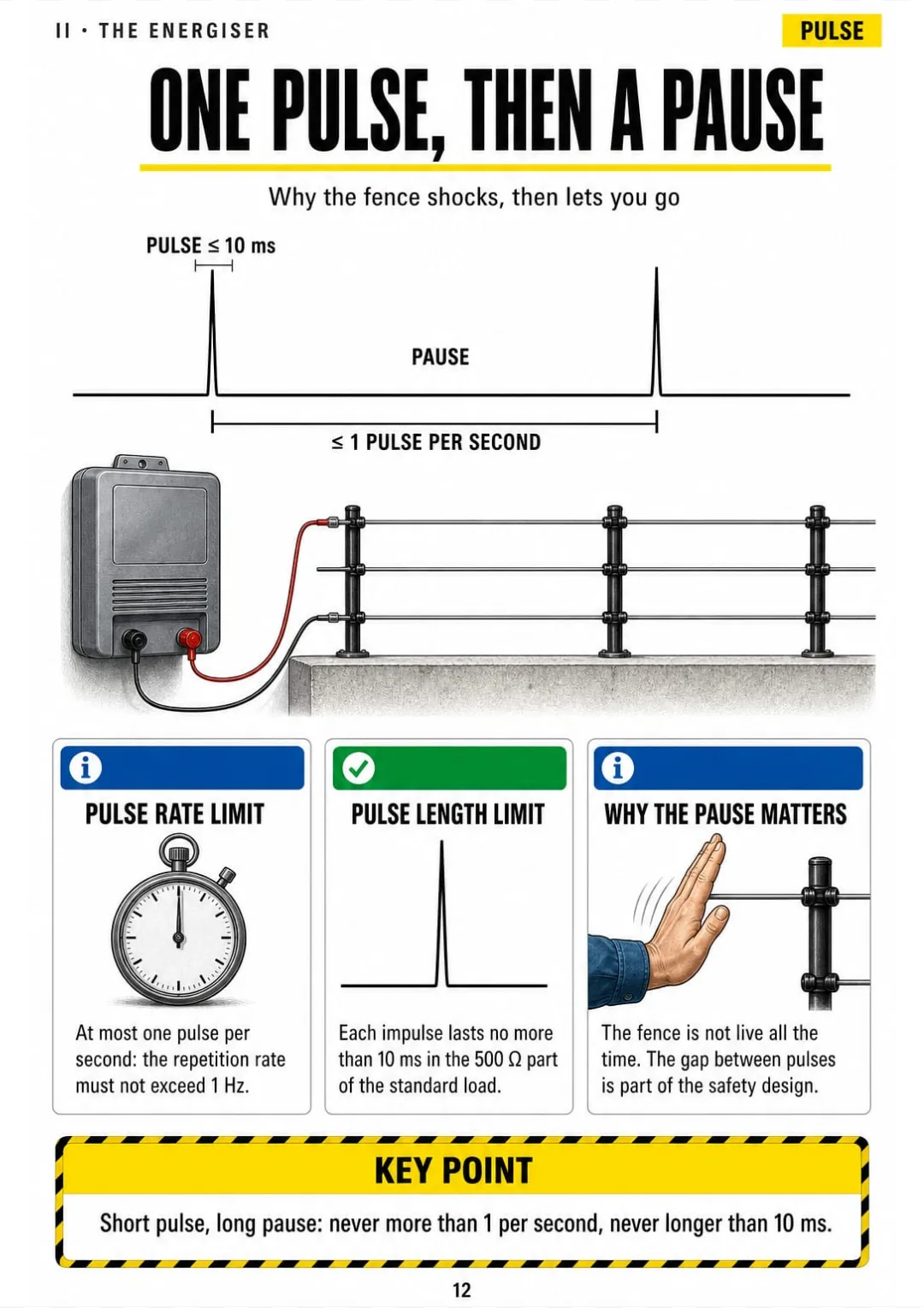
Max 1 pulse per second, max 10 ms per pulse (SANS 60335-2-76).
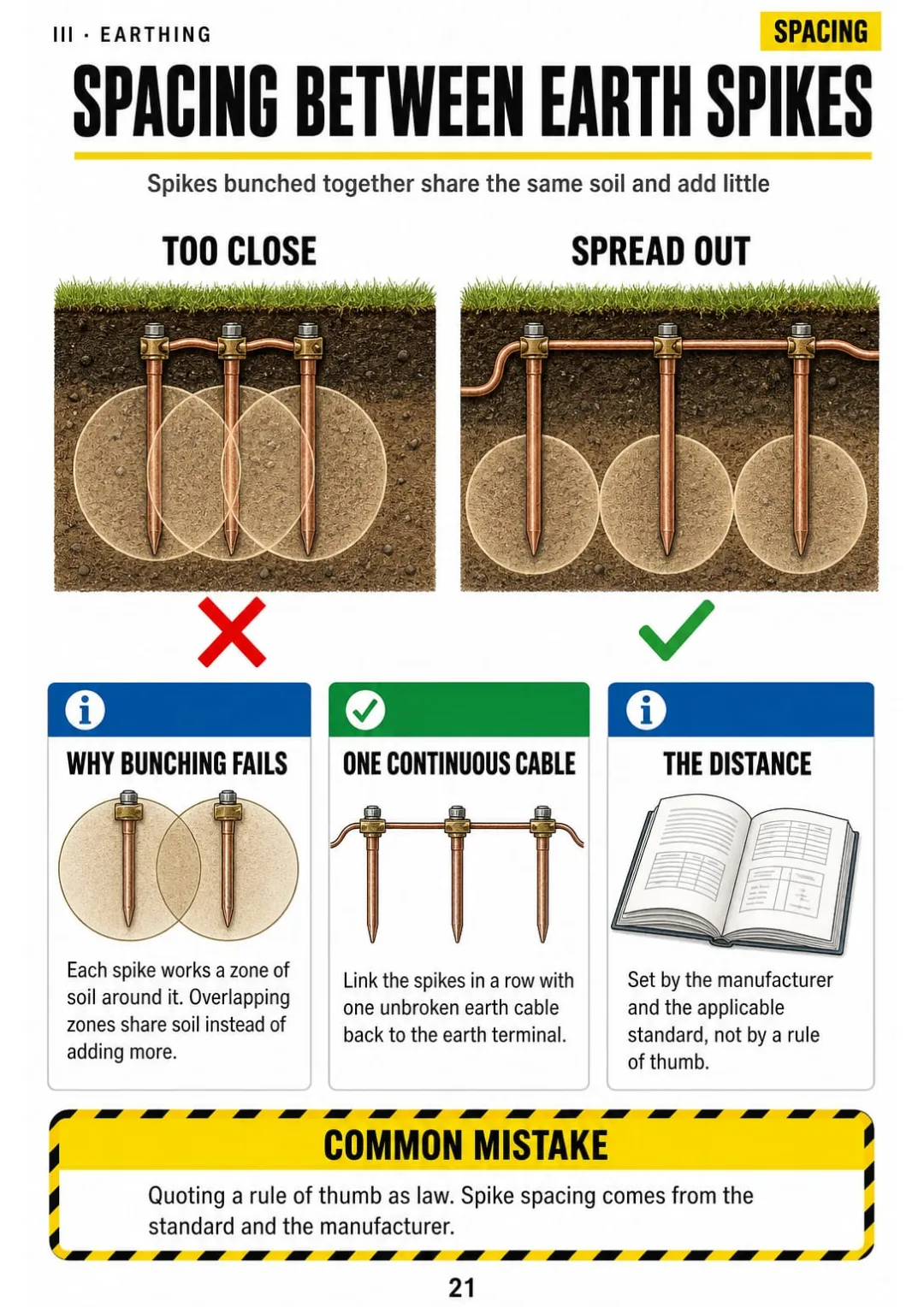
Spread the spikes and link them with one continuous cable: overlapping zones don't add up.
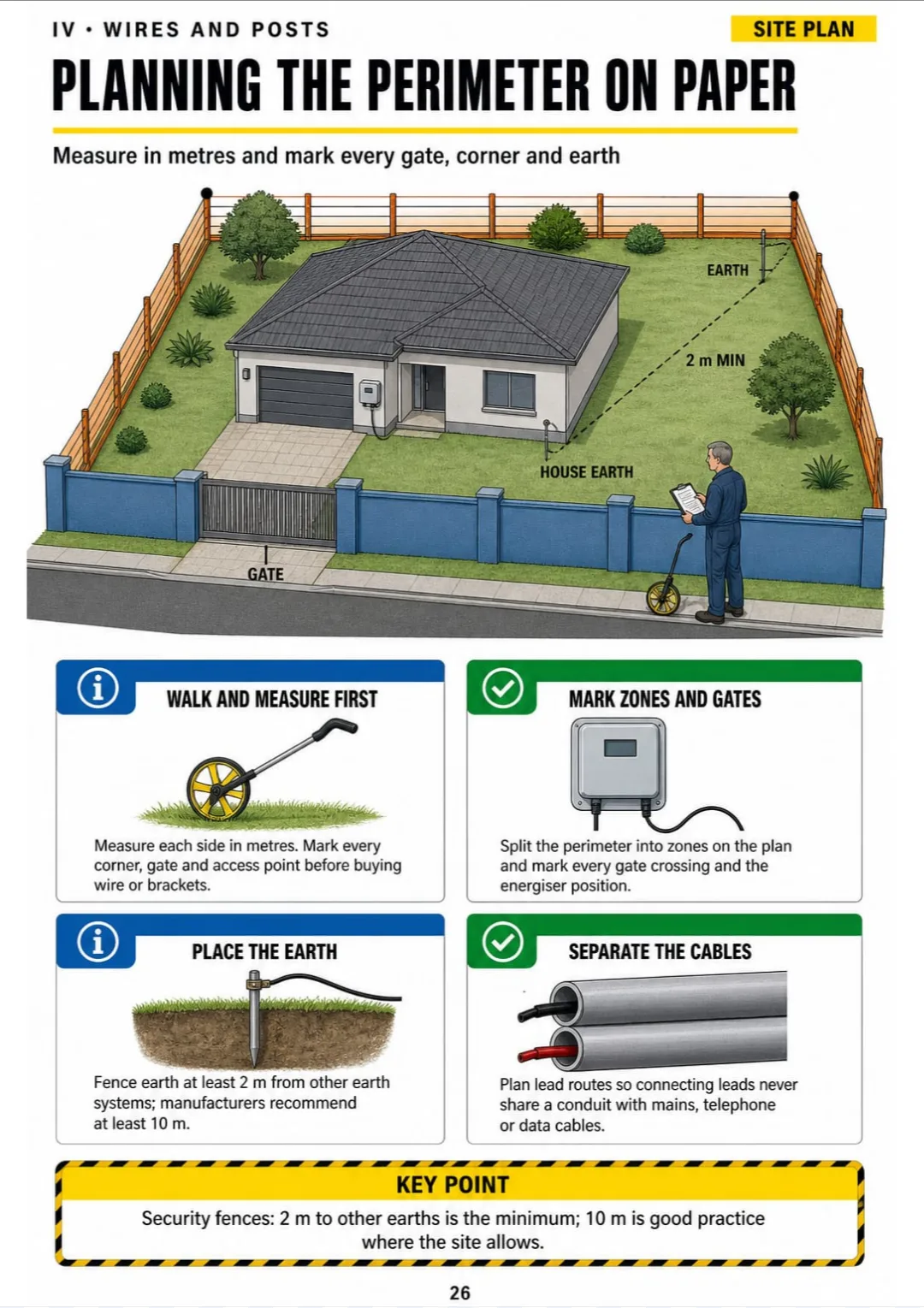
A worked site plan: front wall, back fence, two zones, earth 2 m minimum from other earths.
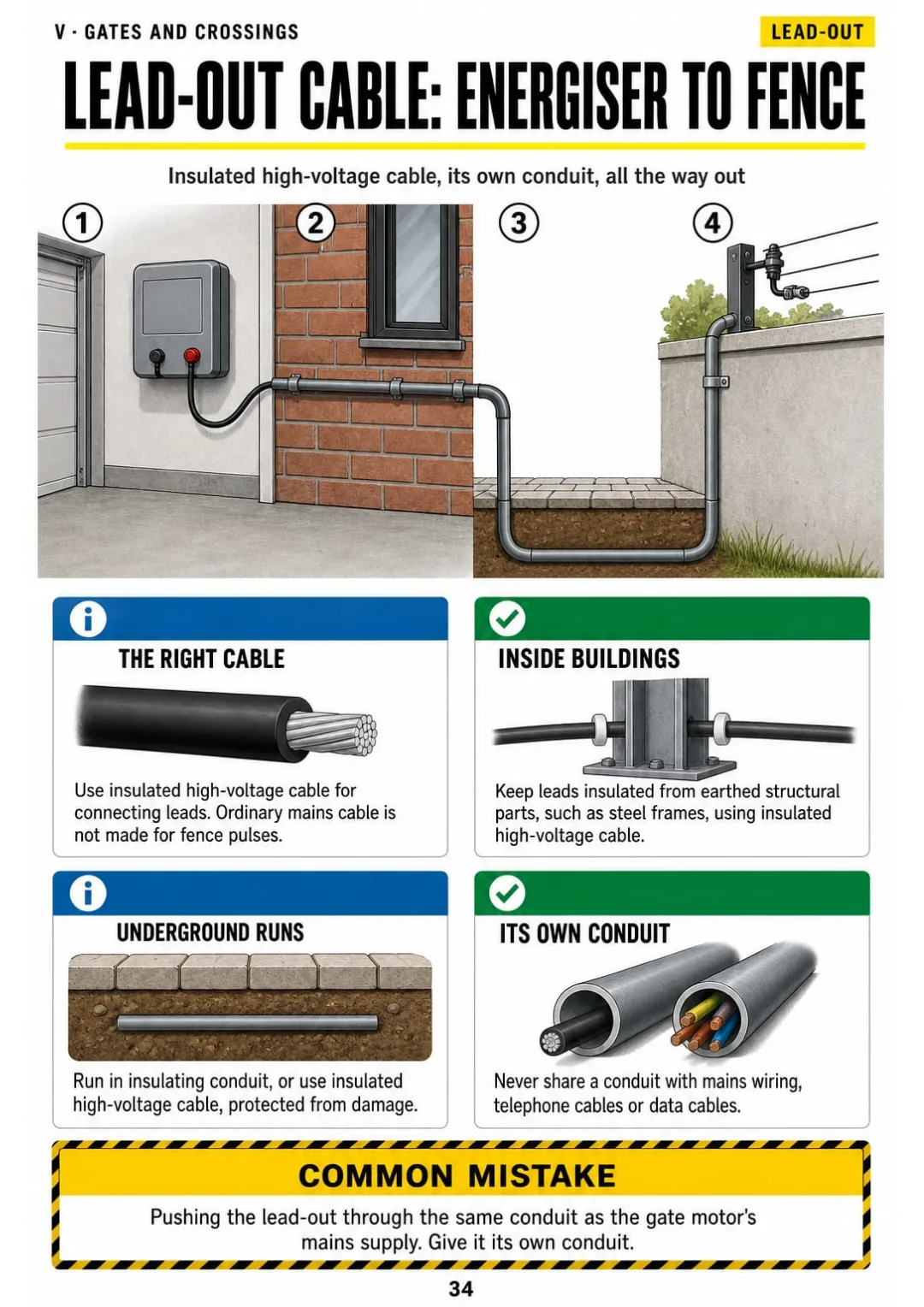
Lead-outs: insulated high-voltage cable, never in a conduit shared with mains, telephone or data cables.
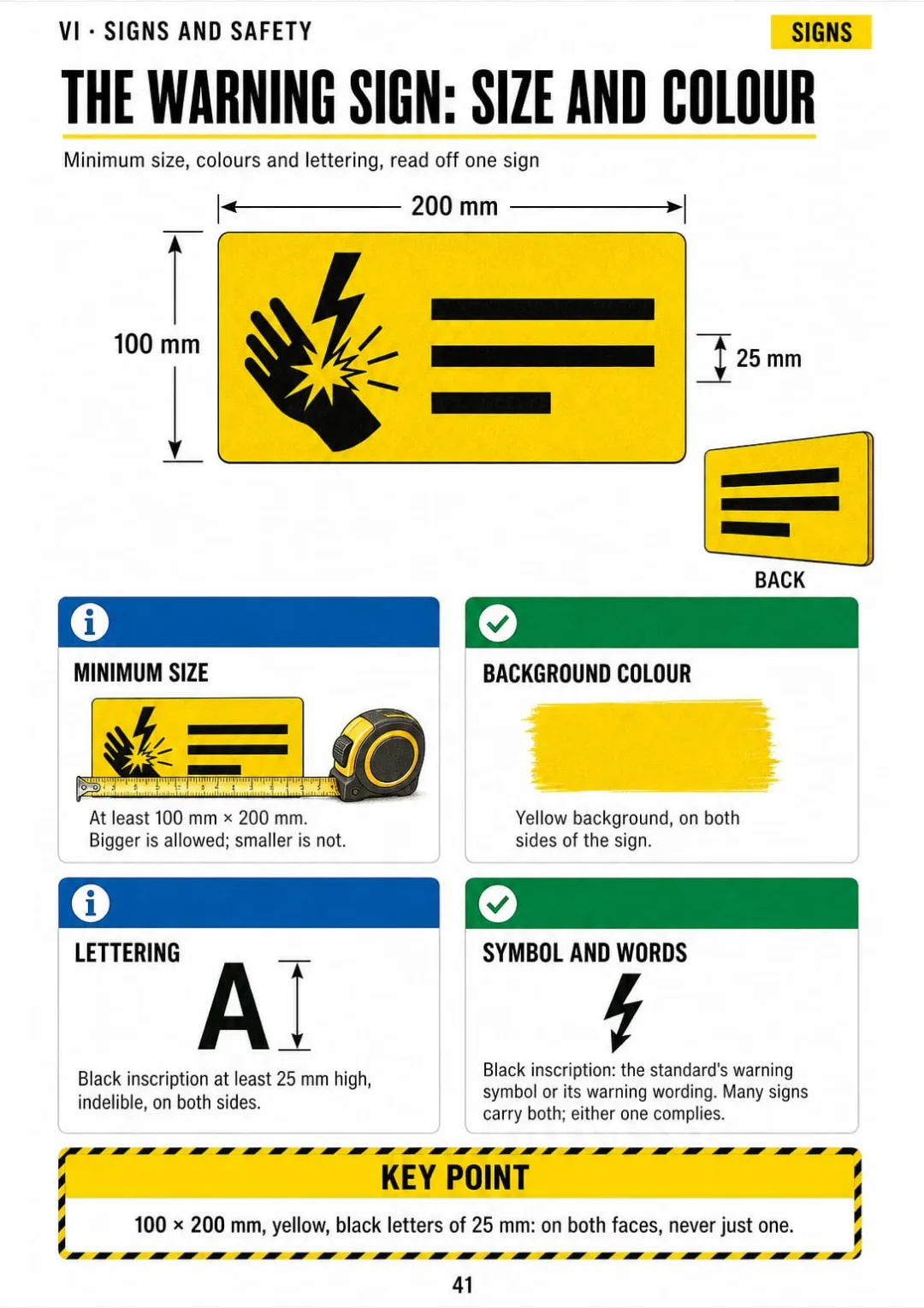
Minimum 100 × 200 mm, yellow both sides, black lettering at least 25 mm high
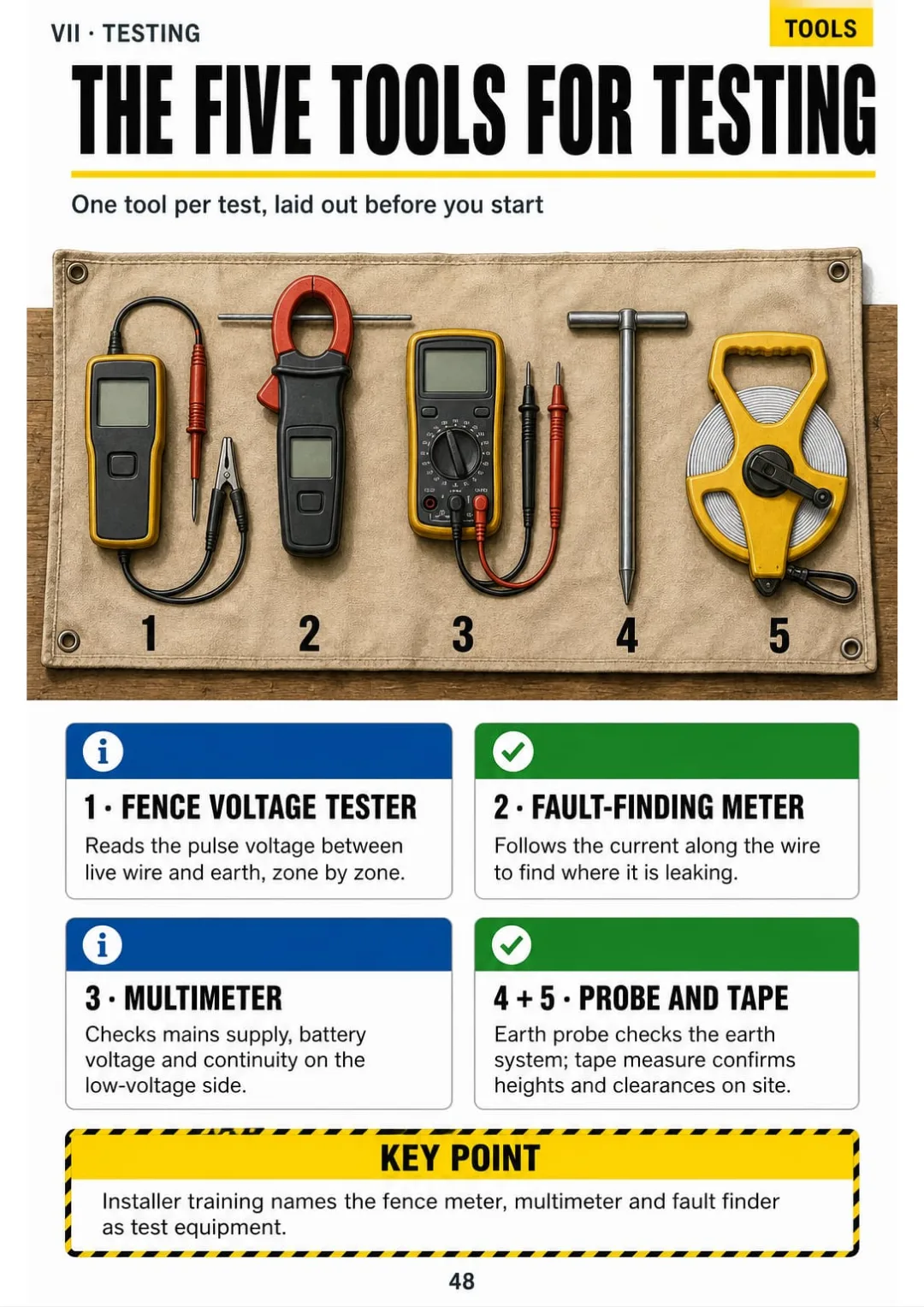
Fence tester, fault finder, multimeter, earth probe and tape: what each one tests.
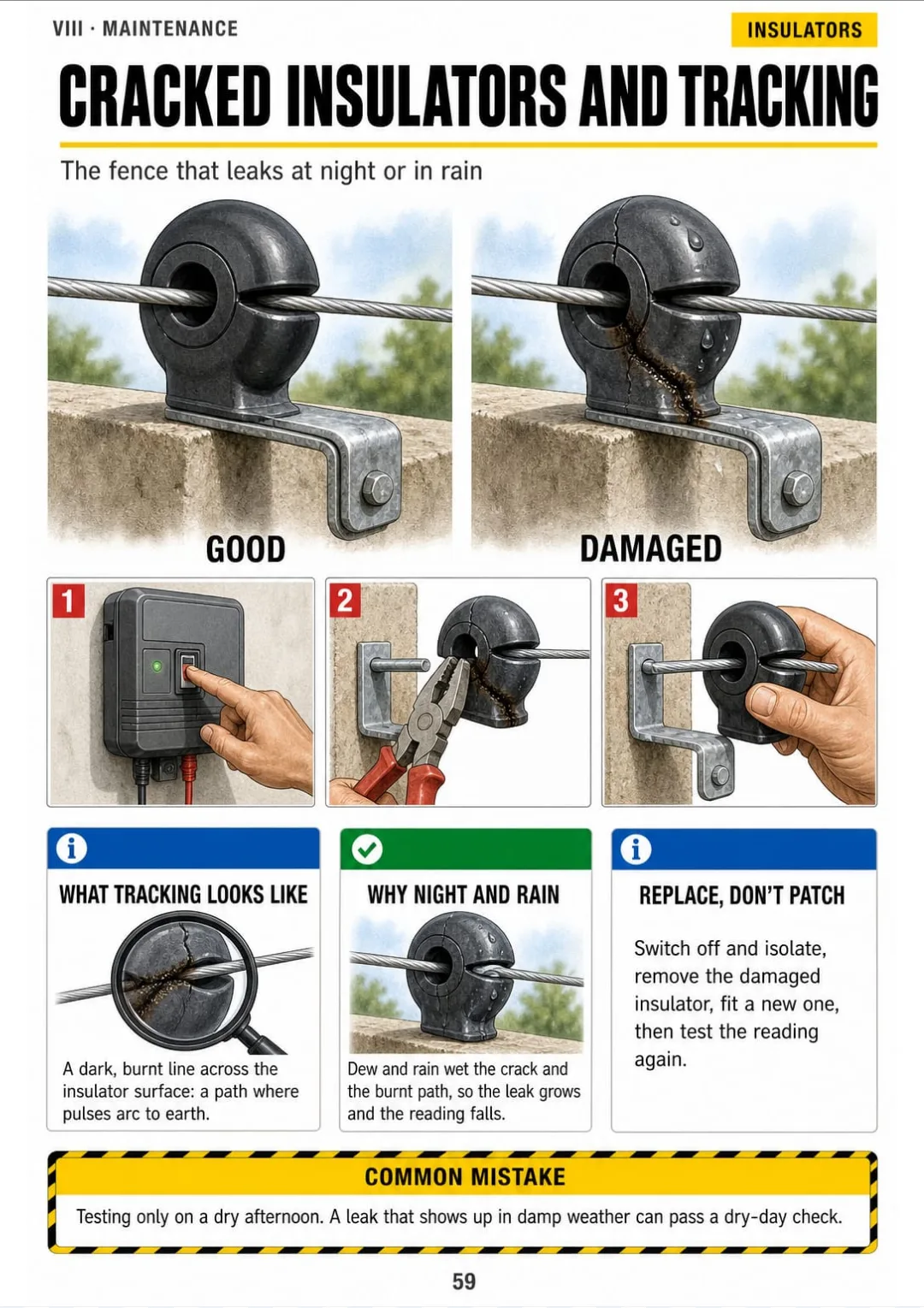
Cracked or tracked insulator: a burnt path to earth that leaks in dew and rain

Swipe to see more →

These are real pages from the book. The table of contents is the full one: 9 parts and 61 topics.

The Problem Isn't You. It's How It Was Explained to You.

You're standing at a new fence with the tester in your hand. The reading is low all the way round, and the client wants to know why.

You suspect the earth. But the manual explains earthing in long paragraphs: spikes, spacing, soil, return path. Read at night, it's gone by the next job.

Spread the spikes and link them with one continuous cable: overlapping zones don't add up.

In the book, the earth is one page: the pulse leaves the energiser, runs through the person and comes back through the soil to the earth spikes. No earth, no shock. You see the loop, so you see what's missing.

The same goes for spike spacing, the lead-out cable, the gate crossing, the warning sign and the inspection round: each one on its own page.

You understand why the fence is weak, and you sort it out on site without opening the regulations again.

COMPARE FOR YOURSELF

The Same Topic, Two Ways to Study It

THIS
  • The manual: line after line
  • Pulse timing explained only in words
  • You go into registration still unsure
The energiser shall deliver its output as a series of discrete impulses rather than as a continuous current. In accordance with the requirements of the applicable standard, the repetition rate of such impulses shall not exceed one impulse per second, and the duration of each impulse, measured across the specified load, shall not exceed 10 ms. The interval between consecutive impulses permits a person in contact with the fence to release it, and compliance therewith shall be verified by the installer prior to commissioning.
FOR THIS
  • The pulse and the pause in one drawing
  • The limits in one box: 1 per second, 10 ms
  • You see it and you get it
Max 1 pulse per second, max 10 ms per pulse (SANS 60335-2-76).
CONTENTS

Take a Look at the 9 Parts and 61 Topics

The system and the rules, the energiser, earthing, wires and insulators, gates and crossings, signs and safety, testing and certifying, maintenance and fault finding, and review: 65 pages, all illustrated.

IThe System and the Rules · pp. 5-11
  1. An Electric Fence Is a Circuit, Not a Wire
  2. The Six Steps of Every Job
  3. Who Sets the Rules in South Africa
  4. The Registered Electric Fence System Installer
  5. The Electric Fence System Certificate of Compliance
  6. Agricultural Fence vs Security Fence
  7. Words You Must Know
IIThe Energiser · pp. 12-18
  1. What the Energiser Does in One Second
  2. Joules vs Kilovolts
  3. Choosing the Energiser for the Site
  4. Where to Mount the Energiser
  5. Mains Supply, Battery and Charger
  6. One Energiser, One Fence
  7. Zones, Alarms and Monitoring
IIIEarthing the Fence · pp. 19-25
  1. Why the Earth Is Half the Fence
  2. Earth Spikes: Material, Length, Number
  3. Spacing Between Earth Spikes
  4. Keep Away from Other Earth Systems
  5. Dry, Sandy and Rocky Ground
  6. Earth Wires on the Fence
  7. Testing the Earth
IVWires, Posts and Insulators · pp. 26-33
  1. Planning the Perimeter on Paper
  2. Wall-Top Brackets
  3. Free-Standing Fence Posts
  4. Wire Heights and Spacing
  5. Choosing the Wire
  6. Insulators: Line, Corner and Strain
  7. Tensioning the Wires
  8. Joints That Do Not Spark
VGates, Corners and Crossings · pp. 34-40
  1. Lead-Out Cable from Energiser to Fence
  2. Crossing Under a Gate
  3. Gate Contacts and Sliding Gates
  4. Corners and Changes of Direction
  5. Joining Zones and Bridging
  6. Fence Near Neighbours and Trees
  7. Overhead Power Lines
VISigns and Safety · pp. 41-47
  1. The Warning Sign: Size and Colour
  2. Where the Signs Go
  3. Signs Facing Both Sides
  4. Public Areas and Physical Barriers
  5. Hazards: Fuel, Gas and Flammables
  6. Children, Pets and Livestock
  7. Working Safely: Isolate Before You Touch
VIITesting and Certifying · pp. 48-55
  1. The Tools You Need
  2. Reading the Fence Voltage
  3. Load Test and Voltage Drop
  4. Checking the Alarm and Zones
  5. Measuring the Distances on Site
  6. Filling In the Certificate of Compliance
  7. The Site Sketch for the Certificate
  8. Handing Over to the Client
VIIIMaintenance and Fault Finding · pp. 56-60
  1. Routine Inspection Round
  2. From Tester Reading to Fault
  3. Finding a Short with the Fault Finder
  4. Cracked Insulators and Tracking
  5. Battery and Energiser Problems
IXReview and Checklists · pp. 61-65
  1. The Whole Job on One Page
  2. The Numbers to Remember
  3. Before-You-Leave-Site Checklist
  4. Most Frequent Mistakes at a Glance
  5. Getting Ready for Registration

One Page, One Topic, All Clear

Think of it this way:

You're on site and the inspector asks where the earth spikes go and how far they sit from the house's own earth system.

In the book you open the earthing page and see the spikes drawn in the ground, with the spacing marked in metres and the pulse returning through the soil.

Lead-outs: insulated high-voltage cable, never in a conduit shared with mains, telephone or data cables.

Same with the energiser, the wire heights, the gate crossing, the warning sign and the test readings: each one on its own page.

Electric Fence Installer Illustrated is 9 parts and 61 topics, all drawn, with the numbers to remember and a before-you-leave-site checklist at the end.

What you see drawn, you don't have to memorize.

What's Inside Electric Fence Installer Illustrated:

Ipp. 5-11

The System and the Rules

The fence as a circuit, the six steps of every job, who sets the rules, the registered installer, the electric fence system certificate, agricultural vs security fences and the key words.

IIpp. 12-18

The Energiser

What the energiser does in one second, joules vs kilovolts, choosing and mounting it, mains, battery and charger, one energiser per fence, zones and alarms.

IIIpp. 19-25

Earthing the Fence

Why the earth is half the fence, earth spikes and their spacing, distance from other earth systems, dry, sandy and rocky ground, earth wires and testing the earth. When the reading is low, you know where to look first.

IVpp. 26-33

Wires, Posts and Insulators

Planning the perimeter on paper, wall-top brackets, free-standing posts, wire heights and spacing, choosing the wire, insulators, tensioning and joints that do not spark.

Vpp. 34-40

Gates, Corners and Crossings

Lead-out cables, crossing under a gate, gate contacts and sliding gates, corners, joining zones, neighbours and trees, and overhead power lines.

VIpp. 41-47

Signs and Safety

The warning sign's size and colour, where the signs go, signs facing both sides, public areas, fuel and gas hazards, children and animals, and isolating before you touch.

VIIpp. 48-55

Testing and Certifying

The testing tools, reading the fence voltage, load test and voltage drop, alarms and zones, measuring on site, filling in the certificate, the site sketch and the handover. Your paperwork matches what you actually measured.

VIIIpp. 56-60

Maintenance and Fault Finding

The routine inspection round, from tester reading to fault, finding a short with the fault finder, cracked insulators and battery or energiser problems.

IXpp. 61-65

Review and Checklists

The whole job on one page, the numbers to remember, the before-you-leave-site checklist, the most frequent mistakes and getting ready for registration.

At the end of the book: The numbers to remember, the most frequent mistakes and a before-you-leave-site checklist.
Plus: 2 Free Books

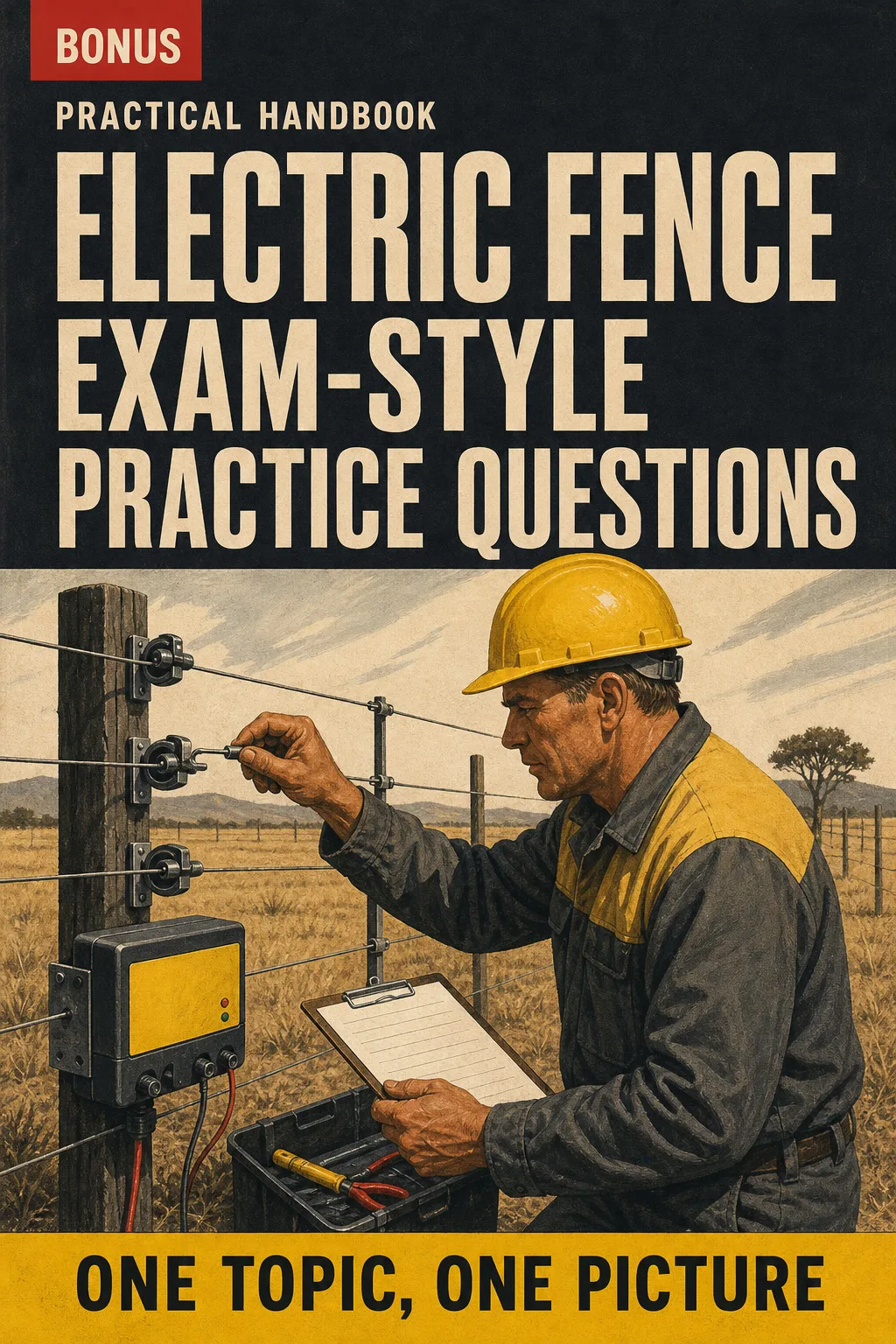
Electric Fence Exam-Style Practice Questions

BONUS 1: «Electric Fence Exam-Style Practice Questions»

Value on its own: US$ 17.90

Test yourself topic by topic with exam-style questions and clear answers, so you find the gaps before registration day, not on it.

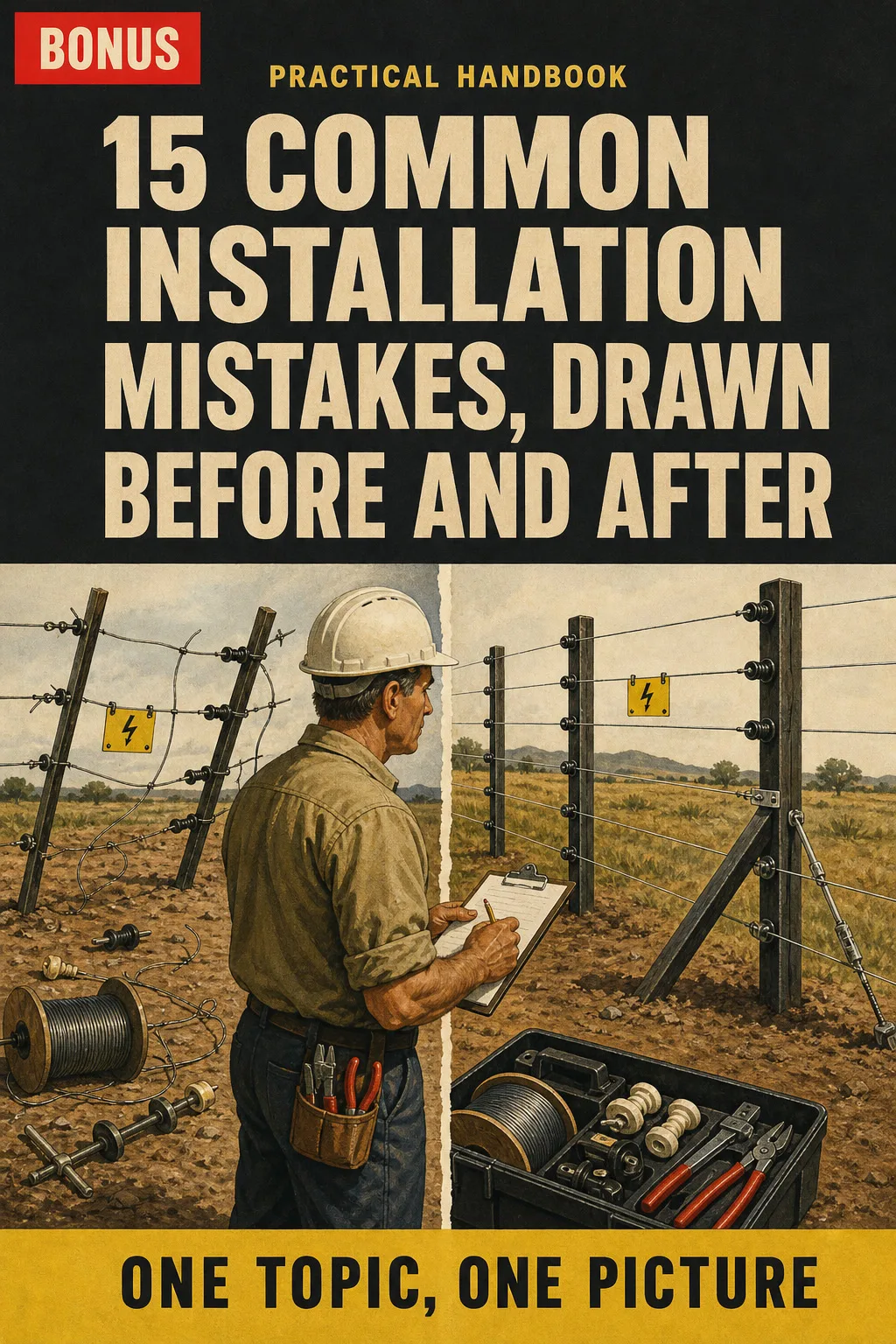
15 Common Installation Mistakes, Drawn Before and After

BONUS 2: «15 Common Installation Mistakes, Drawn Before and After»

Value on its own: US$ 14.90

See the most frequent mistakes on a fence (earth spikes too close, signs in the wrong place, poor gate crossings) next to the correct version, so you spot them at a glance on site.

Electric Fence Installer Illustrated with 2 Free Books

  • Electric Fence Installer Illustrated: 65 illustrated pagesUS$ 63
  • BONUS 1: Electric Fence Exam-Style Practice QuestionsUS$ 17.90
  • BONUS 2: 15 Common Installation Mistakes, Drawn Before and AfterUS$ 14.90
  • High-resolution PDF to printIncluded
Total value US$ 95.80
YOUR PRICE:
US$ 27
You save US$ 68.80
YES, I WANT ELECTRIC FENCE INSTALLER ILLUSTRATED FOR US$ 27

📄 This is a digital PDF book sent to your email: nothing is printed or shipped.

Secure purchaseEncrypted payment30-day guarantee

PDF by email: We email you Electric Fence Installer Illustrated as a PDF, together with the two free books. It's a single payment: no installments, no extra charges.

Who This Book Is For

You're studying for registration

You're studying for registration

Every rule you read at night is a drawing with its dimensions, so the six steps of the job stay in the same order in your head.

Registration is coming up

Registration is coming up

The numbers to remember, the review pages and the practice questions show you which topics still need another look.

You already install fences

You already install fences

Print the pages you use most and keep them in the bakkie: earth spacing, sign size, lead-outs and the inspection round at a glance.

Everything You Get Today

US$ 95.80US$ 27
YES, I WANT ELECTRIC FENCE INSTALLER ILLUSTRATED FOR US$ 27

📄 This is a digital PDF book sent to your email: nothing is printed or shipped.

30DAYS
GUARANTEE

30-Day Guarantee

Try Electric Fence Installer Illustrated for 30 days, bonus books included.

We refund everything if the file won't open, if the book isn't what you see here, if you were charged twice or if the email doesn't arrive. Just email us.

You pay once. No subscriptions.

Frequently Asked Questions

Is it for me if I already install fences and want my own registration?

Yes. It's written for South Africa and organised the way the job runs on site: plan, install, earth, test, certify, maintain. It doesn't teach you to hold a crimper: every page goes straight to the distances, heights, signs and test readings, and the last part covers the certificate, the site sketch and getting ready for registration.

Where does the content come from?

From the current Electrical Machinery Regulations, 2011 under the Occupational Health and Safety Act 85 of 1993, and from SANS 60335-2-76, including its installation requirements. Every figure is checked against these sources.

Is it official material?

No. It's independent study material. It is not issued, approved or endorsed by the Department of Employment and Labour or the SABS.

Does it replace a course or training?

No. It helps you study and revise, but it doesn't replace accredited training, site experience or the official documents. Buying it does not guarantee registration.

Are the practice questions the ones in the exam?

No. They are questions written for this book, to test yourself topic by topic: distances, heights, signs, earthing and test readings. They are not official questions from any exam or assessment, and they don't replace the training or the documents the registration process asks for.

When and how do I receive it?

As a PDF by email, at the address you enter at checkout.

Do I have to pay every month?

No. It's a one-off payment.

Can I have it on paper?

Yes. The PDF is printable: print the whole book or only the pages you want to keep in the bakkie.

How does the refund work?

You have 30 days. We refund everything if the file won't open, if the book isn't what you see on this page, if you were charged twice or if the email doesn't arrive: just email us.

Before You Close This Page

No more rereading the regulations with nothing sticking.

The earth spikes and their spacing: you see them drawn, and that's it.

You reach registration knowing where everything is.

Drawings make studying faster.

The book is right below.

One-time payment: US$ 27 · Guarantee: 30 days · PDF by email

YES, I WANT ELECTRIC FENCE INSTALLER ILLUSTRATED FOR US$ 27

📄 This is a digital PDF book sent to your email: nothing is printed or shipped.